Oral Probiotics Work — But They Only Address 25% of Your Oral Health Needs
The oral probiotic market has exploded, driven by legitimate research showing that beneficial bacteria can improve certain aspects of mouth health. Clinical studies confirm S. salivarius K12 reduces bad breath-causing VSCs by 85%, and a systematic review of 12 RCTs found probiotics reduce plaque scores by 29% and gum bleeding by 45%. These are real, meaningful results.
But here is what probiotic marketing does not tell you: microbiome balance is one of four essential oral health pathways. Probiotics cannot kill established pathogenic bacterial colonies (antimicrobial defense), cannot rebuild damaged gum tissue (tissue repair), cannot remove heavy metals from oral tissues (detoxification), and cannot deliver vitamins or minerals. Addressing only 25% of your oral health needs — even addressing it well — produces incomplete results. This guide examines the real evidence for oral probiotics, identifies their genuine limitations, and explains why comprehensive supplementation outperforms probiotics alone for total oral health improvement.
What Oral Probiotics Can and Cannot Do
Understanding the genuine capabilities and real limitations of oral probiotics helps you make an informed decision about your oral health strategy.
What Probiotics CAN Do: Microbiome Rebalancing
Oral probiotics introduce beneficial bacterial strains that compete with pathogenic species for colonization sites, produce antimicrobial compounds (hydrogen peroxide, bacteriocins), and shift the overall microbiome composition toward healthier ratios. Studies confirm: 29% plaque reduction, 45% bleeding reduction, and 85% VSC reduction with specific strains. These are genuine, clinically validated benefits for the microbiome pathway.
What Probiotics CANNOT Do: Kill Established Pathogens
Probiotics cannot directly kill established pathogenic bacterial colonies — particularly those protected within biofilm structures in deep gum pockets. They can only outcompete pathogens over time through ecological competition. For active infection, direct antimicrobial compounds like iodine (reduces pathogens 60-80%) and xylitol (metabolically starves bacteria) are needed. Dentolyn includes both alongside microbiome support.
What Probiotics CANNOT Do: Repair Damaged Tissue
Probiotics provide zero nutritional support for tissue repair. They cannot deliver vitamin C for collagen synthesis, vitamin B6 for immune cell production, or any building blocks for gum tissue regeneration. Even if probiotics reduce the bacterial load causing damage, without tissue repair nutrients, existing damage persists. Dentolyn delivers vitamin C and B6 for tissue healing alongside bacterial management.
What Probiotics CANNOT Do: Remove Environmental Toxins
Heavy metals (mercury, lead, cadmium) in oral tissues drive chronic inflammation that destabilizes any microbiome improvements probiotics achieve. Without active detoxification, toxins continuously disrupt the bacterial ecosystem probiotics are trying to balance — like planting a garden in contaminated soil. Dentolyn's zeolite-chlorella detoxification removes these toxins, creating the clean environment where microbiome restoration can succeed permanently.
What Probiotics CANNOT Do: Survive Capsule Delivery
Most oral probiotics come in capsule form that must pass through stomach acid (pH 1.5-3.5). Studies show 60-70% of probiotic organisms are destroyed before reaching the intestine — and they never contact oral surfaces at all. The surviving organisms must then somehow migrate back up to colonize the mouth through saliva — an incredibly inefficient delivery mechanism. This fundamental pharmacological limitation reduces capsule probiotic effectiveness dramatically.
What Probiotics CANNOT Do: Address the Gut Component
Paradoxically, most "oral" probiotics are capsules designed for gut colonization, not oral colonization. They address gut microbiome but not the oral microbiome directly. True oral microbiome support requires direct oral delivery (lozenges, drops, or sublingual) — not capsules. Dentolyn's oral-gut dual approach addresses both microbiomes through appropriate delivery mechanisms for each.
Probiotics vs. Comprehensive Supplementation: The Evidence
Probiotics Alone: 1 Pathway, Partial Results
Probiotic-only supplements address microbiome balance — 1 of 4 essential pathways. They reduce plaque 29%, bleeding 45%, and VSCs 85% (with best strains). But they provide no antimicrobial minerals, no tissue repair vitamins, no detoxification, and no direct pathogen killing. Results plateau because the other 3 pathways remain unaddressed. Cost: $30-40/month for 25% coverage.
Dentolyn: 4+ Pathways, Complete Results
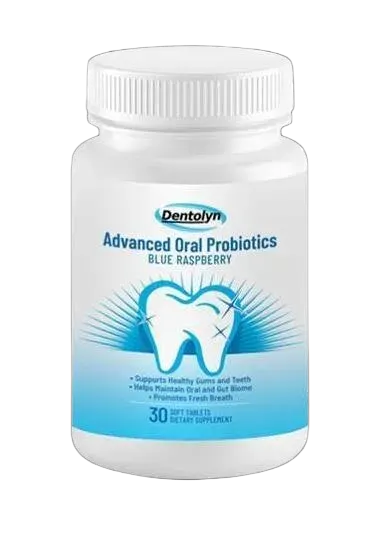
Dentolyn addresses all 4 pathways: antimicrobial defense (xylitol + iodine), tissue repair (vitamin C + B6), detoxification (zeolite + chlorella), and microbiome balance (dual oral-gut support). It also directly kills pathogenic bacteria (probiotics cannot), removes environmental toxins (probiotics cannot), and provides structural nutrients for tissue healing (probiotics cannot). Cost: $49/month for 100% coverage.
The Math: 4x Coverage for 1.3x Price
Dentolyn costs approximately 30% more than probiotic-only supplements ($49 vs. $35-40) but provides 4x the pathway coverage. Per-pathway, Dentolyn costs $12.25/pathway/month while probiotics cost $35-40 for a single pathway. The value proposition is overwhelming — especially when you consider that incomplete pathway coverage limits results regardless of how effective your single-pathway product is.
Choice
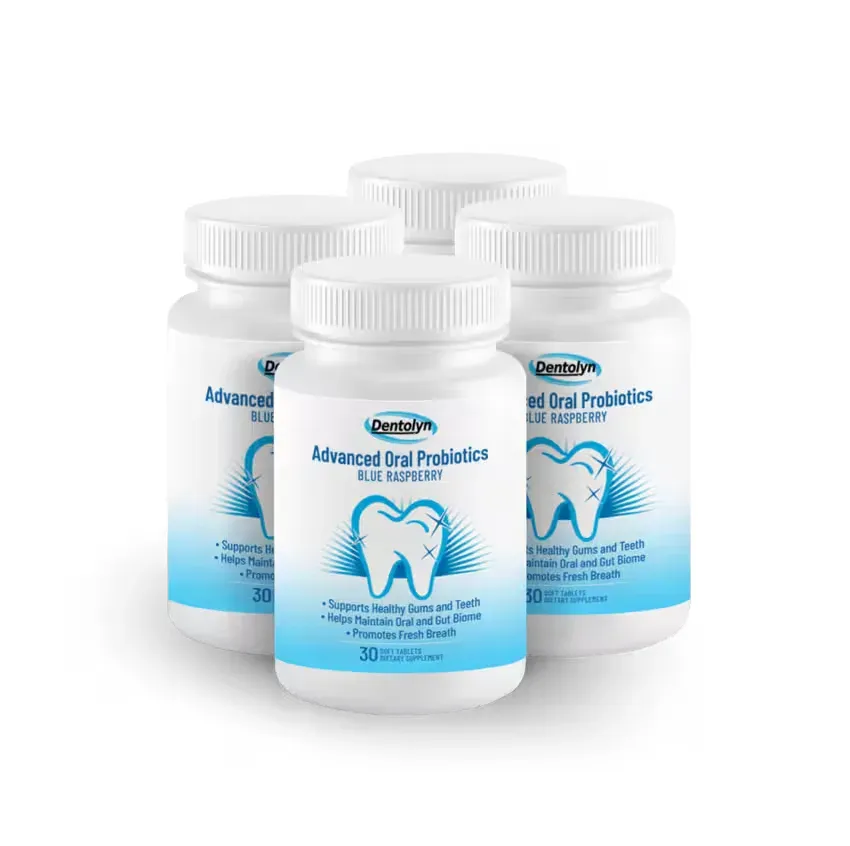
Dentolyn — Beyond Probiotics: Complete Oral Health Support
Dentolyn includes microbiome-supporting ingredients (xylitol's selective pressure, chlorella's prebiotic effects) PLUS the three additional pathways probiotics miss: antimicrobial defense via iodine, tissue repair via vitamin C and B6, and environmental detoxification via zeolite and chlorella. It provides everything a probiotic supplement does plus the three things it cannot. Rated 4.8/5 by 41,000+ users — many of whom switched from probiotic-only products.
What the Research Actually Shows About Oral Probiotics
Here is an honest assessment of the clinical evidence for oral probiotics — what is strong, what is weak, and what it means for your oral health strategy.
Strong Evidence: Bad Breath Reduction
Research Finding: S. salivarius K12 reduced volatile sulfur compounds by 85% in a clinical trial with participants showing significant improvement after just 1 week. A meta-analysis confirmed probiotics reduce halitosis-related parameters across multiple studies. This is the strongest evidence for oral probiotics. However, Dentolyn's xylitol-iodine combination achieves comparable breath improvement while simultaneously addressing the bacterial causes of the odor — not just competing with odor-producing species but killing and starving them.
Strong evidence for K12 strain specifically
Moderate Evidence: Gum Inflammation Reduction
Research Finding: A systematic review of 12 RCTs found probiotics reduce gingival bleeding index by 45% and plaque scores by 29% over 8 weeks. However, results were strain-specific (not all probiotics work) and heterogeneous across studies. Importantly, these improvements came without tissue repair — gums were less inflamed but not structurally stronger. Dentolyn's vitamin C drives actual collagen synthesis for stronger gums, while iodine reduces inflammation through direct pathogen elimination — a fundamentally different and more complete mechanism.
Moderate evidence — strain-dependent
Weak Evidence: Long-Term Oral Colonization
Research Finding: Most probiotic strains show only temporary oral colonization — they persist for days to weeks after supplementation stops, then the microbiome reverts to its previous composition. True permanent microbiome rebalancing requires sustained selective pressure against pathogenic species. Xylitol (in Dentolyn) provides this sustained pressure by metabolically starving harmful bacteria, creating permanent ecological shifts that temporary probiotic colonization cannot achieve.
Weak evidence for lasting colonization changes💡 Key Takeaway
Oral probiotics have genuine evidence for breath improvement and moderate evidence for inflammation reduction. However, they address only one oral health pathway, produce temporary rather than permanent microbiome changes, and cannot kill established pathogens, repair tissue, or remove toxins. Dentolyn's comprehensive 7-ingredient formula provides superior results by addressing all four pathways simultaneously — including the microbiome benefits probiotics offer plus the three additional pathways they cannot touch.
Go Beyond Probiotics — Get Complete Oral Health Support
- Everything probiotics offer PLUS 3 additional pathways
- Xylitol + iodine: direct antimicrobial action probiotics lack
- Zeolite + chlorella: detoxification probiotics cannot provide
- Vitamin C + B6: tissue repair and immune support
- 41,000+ users report superior results to probiotics alone

When Probiotics Make Sense and When They Do Not
Probiotics Make Sense IF...
You have already addressed antimicrobial defense, tissue repair, and detoxification through comprehensive supplementation (like Dentolyn), and want additional microbiome support on top of that coverage. In this case, adding a probiotic lozenge provides supplemental benefit. Think of it as the cherry on top of a complete protocol — not the foundation.
Probiotics Do NOT Make Sense IF...
They are your ONLY oral health supplement. Using probiotics alone leaves 75% of oral health pathways unaddressed — no antimicrobial minerals, no tissue repair vitamins, no detoxification. This is like treating a house fire with a garden hose while ignoring the three other fires burning simultaneously. Comprehensive supplementation first, probiotics as optional enhancement.
Best Strategy: Dentolyn First, Probiotics Optional
Start with Dentolyn for comprehensive 4-pathway coverage. After establishing this foundation, assess whether additional probiotic supplementation provides noticeable benefit. Most of the 41,000+ Dentolyn users find the formula's microbiome support sufficient without adding separate probiotics — saving $30-40/month while achieving superior overall results.
Users Who Switched From Probiotics to Dentolyn

"I used an oral probiotic for 6 months. It helped with breath but my gum bleeding and inflammation persisted. Switched to Dentolyn and within 4 weeks the bleeding stopped — something the probiotic never achieved. The iodine and vitamin C address what probiotics simply cannot. I was spending $35/month on partial results. Dentolyn at $49/month gives me complete results."

"As a microbiologist, I initially gravitated toward probiotic oral supplements. The microbiome science is solid. But after seeing limited results, I realized microbiome balance alone is insufficient — you also need pathogen control, tissue support, and toxin removal. Dentolyn's comprehensive approach was immediately more logical. Results confirmed it within 6 weeks. The multi-pathway strategy is scientifically superior."

"Two different probiotic supplements over a year. My breath improved slightly but my gum health stayed the same — my periodontist was still concerned about pocket depths and inflammation. Switched to Dentolyn and the zeolite detox plus iodine antimicrobial action changed everything. Three months later, my pocket measurements improved for the first time. The probiotics were a piece of the puzzle; Dentolyn is the whole puzzle."
Frequently Asked Questions
Do probiotics for mouth health actually work?
+Yes, with significant limitations. Clinical evidence confirms specific probiotic strains (K12, M18) reduce bad breath VSCs by 85%, plaque by 29%, and gum bleeding by 45%. However, probiotics only address microbiome balance — 1 of 4 essential oral health pathways. They cannot kill established pathogens, repair tissue, or remove toxins. For complete oral health improvement, comprehensive supplements like Dentolyn that cover all 4 pathways deliver substantially better results.
What are the best probiotic strains for mouth health?
+S. salivarius K12 (reduces VSCs 85%, bad breath reduction) and S. salivarius M18 (produces dextranase and urease enzymes that break down plaque). L. reuteri and L. salivarius also show moderate evidence. However, even the best strains only provide single-pathway support. Dentolyn's multi-compound approach provides microbiome benefits plus antimicrobial, tissue repair, and detoxification support for comprehensive oral health.
Should I take oral probiotics instead of or with Dentolyn?
+Instead of: No. Probiotics alone cover 25% of oral health pathways. Dentolyn covers 100%. With: Optional. Dentolyn already includes microbiome-supporting ingredients (xylitol selective pressure, chlorella prebiotic effects). Adding a separate probiotic provides marginal additional microbiome benefit at $30-40/month additional cost. Most Dentolyn users find the formula sufficient without additional probiotic supplementation.
Why did my probiotic supplement not improve my gum health?
+Three likely reasons: (1) Capsule delivery destroyed 60-70% of organisms in stomach acid before they could reach oral tissues. (2) Probiotics cannot repair damaged tissue — they need vitamin C and collagen support to heal gums. (3) Environmental toxins in your oral tissues continued driving inflammation despite microbiome improvement. Dentolyn addresses all three barriers: direct antimicrobial delivery, vitamin C for tissue repair, and zeolite-chlorella detoxification.
How long do oral probiotics take to show results?
+Oral probiotics typically show initial breath improvement in 3-4 weeks and gum health changes in 8-12 weeks. Dentolyn produces faster initial results — 1-2 weeks for breath improvement — because its xylitol and iodine provide immediate antimicrobial action alongside the slower microbiome rebalancing process. The combination approach accelerates the timeline significantly compared to probiotics alone.
Are oral probiotics worth the cost?
+At $30-40/month for single-pathway coverage, oral probiotics offer moderate value. But at $49/month, Dentolyn provides 4x the pathway coverage for only 30% more cost — making it dramatically better value per pathway. If budget allows only one supplement, Dentolyn is the clear choice. If budget allows both, use Dentolyn as the foundation and consider adding a probiotic lozenge as optional enhancement.
Related Articles
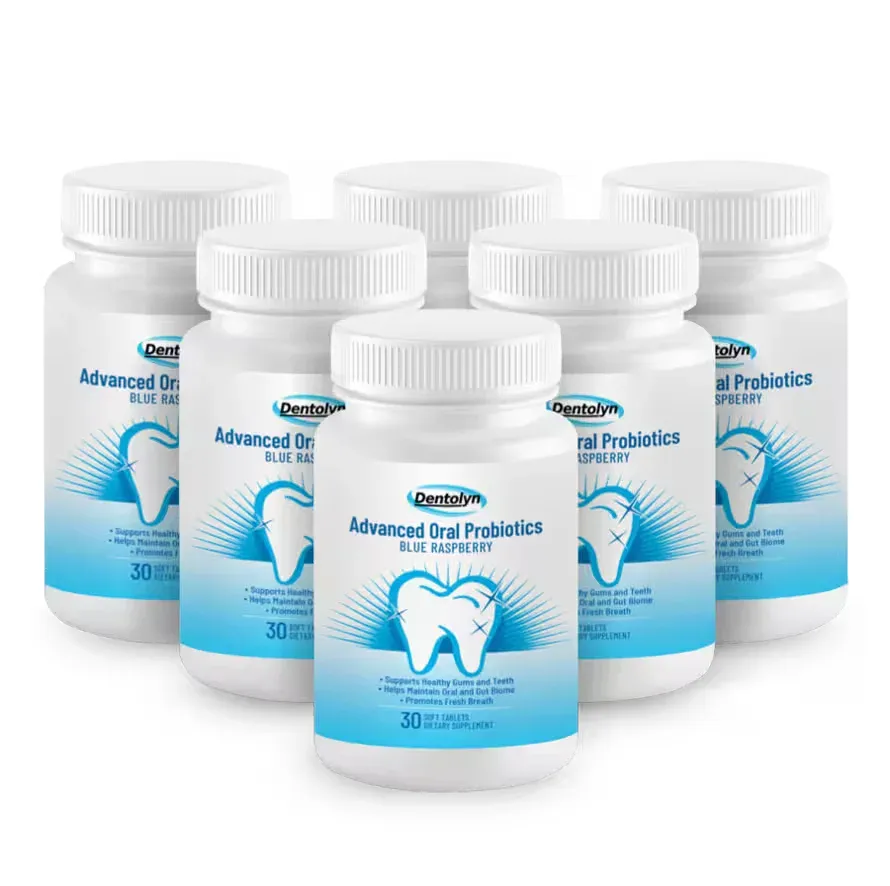
Go Beyond Single-Pathway Probiotics — Get Complete Coverage
Probiotics address 25% of your oral health needs. Dentolyn addresses 100%. For $14/month more than a probiotic supplement, you get antimicrobial defense, tissue repair, environmental detoxification, AND microbiome support. 41,000+ users confirm the comprehensive approach produces superior results. Try it risk-free with a 60-day money-back guarantee.